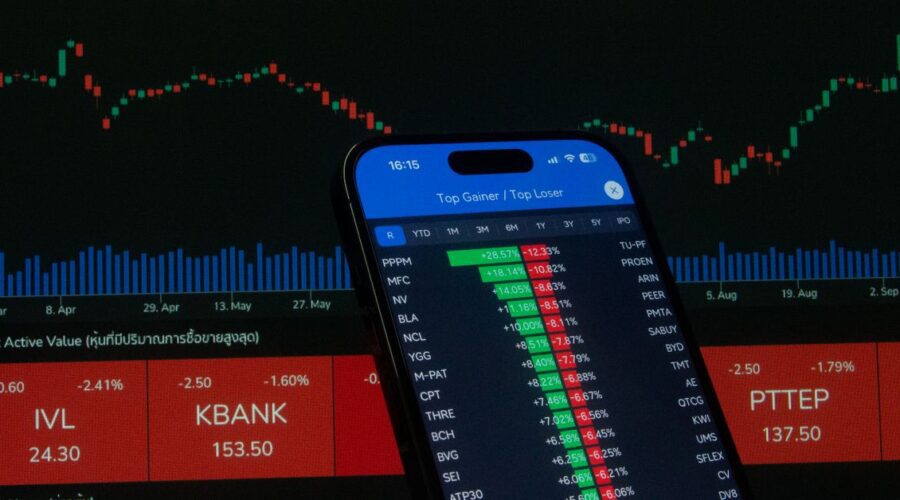
What is capital market? It is the part of the financial system where companies and governments raise long-term money by selling shares and bonds, and where investors trade those securities. Therefore, it connects savers who want returns with businesses that need funds to grow.
India’s capital market includes the stock exchanges, depositories, brokers and the regulator SEBI. This guide explains its two segments, the instruments, the participants and the functions. You can find related guides in our Shareholding & Fundamentals category.
Quick answer: The capital market is a marketplace for long-term securities such as shares, bonds and debentures. It has a primary market, where new securities are issued, and a secondary market, where investors trade existing ones. SEBI regulates it, and NSE and BSE run the main exchanges.
Key Takeaways
- The capital market deals in long-term securities, usually with maturities above one year.
- The primary market issues new securities; the secondary market trades existing ones.
- Equity and debt are the two main instrument families.
- SEBI regulates the market; NSDL and CDSL hold securities in demat form.
- The capital market differs from the money market, which handles short-term funds.
What Is Capital Market? A Simple Definition
A business needs money to build factories, hire people and expand. It can borrow from a bank, or it can sell a stake or bonds to the public. The capital market makes the second route possible.
For example, when a company launches an IPO, it sells new shares to investors in the primary market. Later, those investors can sell the shares to others on the NSE or BSE. That later trading happens in the secondary market. Our guide to the shareholder quota in an IPO shows one slice of how IPO allocation works.
Types of Capital Market: Primary and Secondary
| Feature | Primary market | Secondary market |
|---|---|---|
| Purpose | Raise fresh capital | Trade existing securities |
| Who sells | The issuing company or government | Existing investors |
| Who gets the money | The issuer | The selling investor |
| Examples | IPO, follow-on offer, rights issue | Trading on NSE and BSE |
| Price | Fixed or discovered through a bid process | Set by demand and supply |
| Key role | Capital formation | Liquidity and price discovery |
The two segments depend on each other. A liquid secondary market makes investors more willing to buy in the primary market. As a result, companies can raise money more cheaply.
Primary Market Routes in India
| Route | How it works | Who can apply |
|---|---|---|
| Initial public offer (IPO) | A private company sells shares to the public for the first time | Retail, institutional and other investors through ASBA |
| Follow-on public offer (FPO) | A listed company issues more shares to the public | Any eligible investor |
| Rights issue | A listed company offers new shares to existing shareholders | Existing shareholders on the record date |
| Private placement or preferential allotment | A company issues shares to selected investors | Chosen institutions or individuals |
| Qualified institutional placement (QIP) | A listed company raises funds from qualified institutions | Institutional buyers only |
Each route follows SEBI disclosure rules. Consequently, offer documents list risks, use of funds and financials, so investors can compare options.
Capital Market Instruments
| Instrument | What it is | Who issues it | Return type |
|---|---|---|---|
| Equity shares | Ownership stake in a company | Companies | Dividends and price gains |
| Preference shares | Priority claim on dividends | Companies | Fixed dividend |
| Debentures and bonds | Long-term borrowing | Companies and governments | Interest |
| Government securities | Loans to the government | Central and state governments | Interest |
| Mutual fund units | Pooled investment | Asset management companies | Payouts (IDCW) and NAV growth |
| ETFs and REITs | Exchange-traded funds and property trusts | Fund houses and trusts | Price gains and distributions |
You can read more about owners and their rights in our guides on who a shareholder is and preference shareholders. Meanwhile, the fund route is explained in our IDCW meaning article.
Key Participants in the Indian Capital Market
- Issuers: Companies and governments that raise funds.
- Investors: Retail investors, mutual funds, insurers and foreign portfolio investors. See our FII and DII guide.
- Intermediaries: Brokers, merchant bankers, underwriters and registrars.
- Exchanges: NSE and BSE provide trading platforms.
- Depositories: NSDL and CDSL hold securities in demat form.
- Regulator: SEBI protects investors and sets the rules.
Role of SEBI and Other Regulators
The Securities and Exchange Board of India was formed in 1988 and received statutory powers in 1992. It writes disclosure norms, supervises intermediaries and polices fraud. The Ministry of Corporate Affairs administers the Companies Act, and the RBI oversees the money and government securities markets.
You can read SEBI’s investor material on its investor portal, and the exchanges publish rules on the NSE and BSE.
Functions of the Capital Market
| Function | How it works |
|---|---|
| Capital formation | Channels household savings into productive businesses |
| Liquidity | Lets investors sell securities quickly |
| Price discovery | Sets fair prices through supply and demand |
| Risk sharing | Spreads business risk across many investors |
| Corporate governance | Disclosure rules push companies toward transparency |
| Wealth creation | Gives savers access to growth through equity |
Together, these functions explain why a developed capital market supports economic growth. Moreover, they give small investors access to opportunities once available only to large institutions.
Capital Market vs Money Market
| Feature | Capital market | Money market |
|---|---|---|
| Maturity | Long term (above one year) | Short term (up to one year) |
| Instruments | Shares, bonds, debentures | Treasury bills, commercial paper, call money |
| Risk | Higher | Lower |
| Return | Higher potential | Lower |
| Main participants | Companies, retail and institutional investors | Banks and large institutions |
Think of the money market as the place for short-term cash needs. In contrast, the capital market funds long-term growth.
How Retail Investors Participate
- Open a demat and trading account with a SEBI-registered broker.
- Complete KYC with identity and address proof.
- Link your bank account for payments.
- Buy IPOs through ASBA or buy listed securities on the exchanges.
- Track your holdings and corporate actions through your broker or depository statements.
After you invest, corporate actions such as dividends, splits and buybacks affect your holdings. Our guides on the Adani Power stock split and the Infosys buyback record date show how these work in practice.
Risks and Safeguards in the Capital Market
| Risk | What it means | Safeguard |
|---|---|---|
| Market risk | Prices fall with the market | Diversify and invest for the long term |
| Company risk | A business performs badly | Read disclosures and spread holdings |
| Liquidity risk | You cannot sell quickly at a fair price | Prefer actively traded securities |
| Fraud risk | Unregistered advisers or fake tips | Use SEBI-registered intermediaries only |
| Settlement risk | Trade fails to settle | Exchange clearing corporations guarantee settlement |
Regulation reduces these risks but cannot remove them. Therefore, treat every investment as a risk decision, and verify any adviser on the SEBI website.
Expert Insights: Reading the Market Structure
First, remember that the primary market gives companies capital, while the secondary market gives you liquidity. Second, watch who dominates trading, because foreign flows and domestic institutions move prices differently. Third, keep an eye on regulation, since rule changes in listing, disclosure and settlement affect every investor.
Common Mistakes Beginners Make
- Confusing the stock market with the entire capital market.
- Treating primary market purchases as risk-free because the price looks fixed.
- Ignoring debt instruments when building a portfolio.
- Trading through unregistered intermediaries.
- Chasing tips instead of reading company disclosures.
Frequently Asked Questions
What is capital market in simple words?
It is the market where companies and governments raise long-term funds by selling shares and bonds, and where investors trade those securities afterwards.
What are the two types of capital market?
The primary market issues new securities, and the secondary market trades existing securities among investors.
Which instruments trade in the capital market?
Equity shares, preference shares, debentures, bonds, government securities, mutual fund units, ETFs and REITs are common instruments.
Who regulates the capital market in India?
SEBI is the principal regulator. The Ministry of Corporate Affairs administers company law, and the RBI oversees money and government securities markets.
How is the capital market different from the money market?
The capital market deals in long-term securities. The money market handles short-term instruments with maturities up to one year.
Is the stock market the same as the capital market?
No. The stock market is a part of the capital market, which also includes bonds, debentures and other long-term instruments.
What role do NSDL and CDSL play?
They are depositories that hold securities in electronic form, so investors can trade without paper certificates.
Why Knowing What Is Capital Market Helps You Invest
Understanding what is capital market gives you a map of where your money goes and who protects it. Learn the difference between primary and secondary trading, use SEBI-registered intermediaries and read company disclosures before you invest. Visit the Investor Weekly News for more explainers. This article is educational and not investment advice.
Trending Now
- Government Shareholding in SBI: Full Breakdown 2026
- Titan Company Promoter Shareholding Analysis June 2026 — Pledged Shares and Insider Signals
- 15 Highest Dividend Paying Stocks in India (2026 List)
- Maruti Suzuki Promoter Shareholding Analysis May 2026 — Pledged Shares and Insider Signals
- Best NBFC Stocks India June 2026 — Bajaj Finance vs Peers Complete Comparison
Disclaimer: Investor Weekly News is an independent, informational website. We are not affiliated with any company, broker, stock exchange, or regulator named in this article. Nothing here is investment, tax, or legal advice. Always confirm dates and terms in the official NSE, BSE, or company announcement before you act.

Written by
Sarita is a Senior Analyst and Lead Contributor at InvestorWeeklyNews. As a commerce postgraduate, she specializes in deep-dive analysis of financial instruments, including the Nifty 50, Gold ETFs, and RBI bonds. Sarita combines her academic expertise with a passion for wealth management to provide practical, everyday-use financial insights for modern investors.